
Dementia is a condition that affects millions of people globally, yet many remain unaware of its early warning signs. Early detection can significantly boost quality of life for individuals and families affected by dementia. By understanding these initial symptoms, you can take proactive steps toward seeking medical support and care.
Memory Loss that Disrupts Daily Life
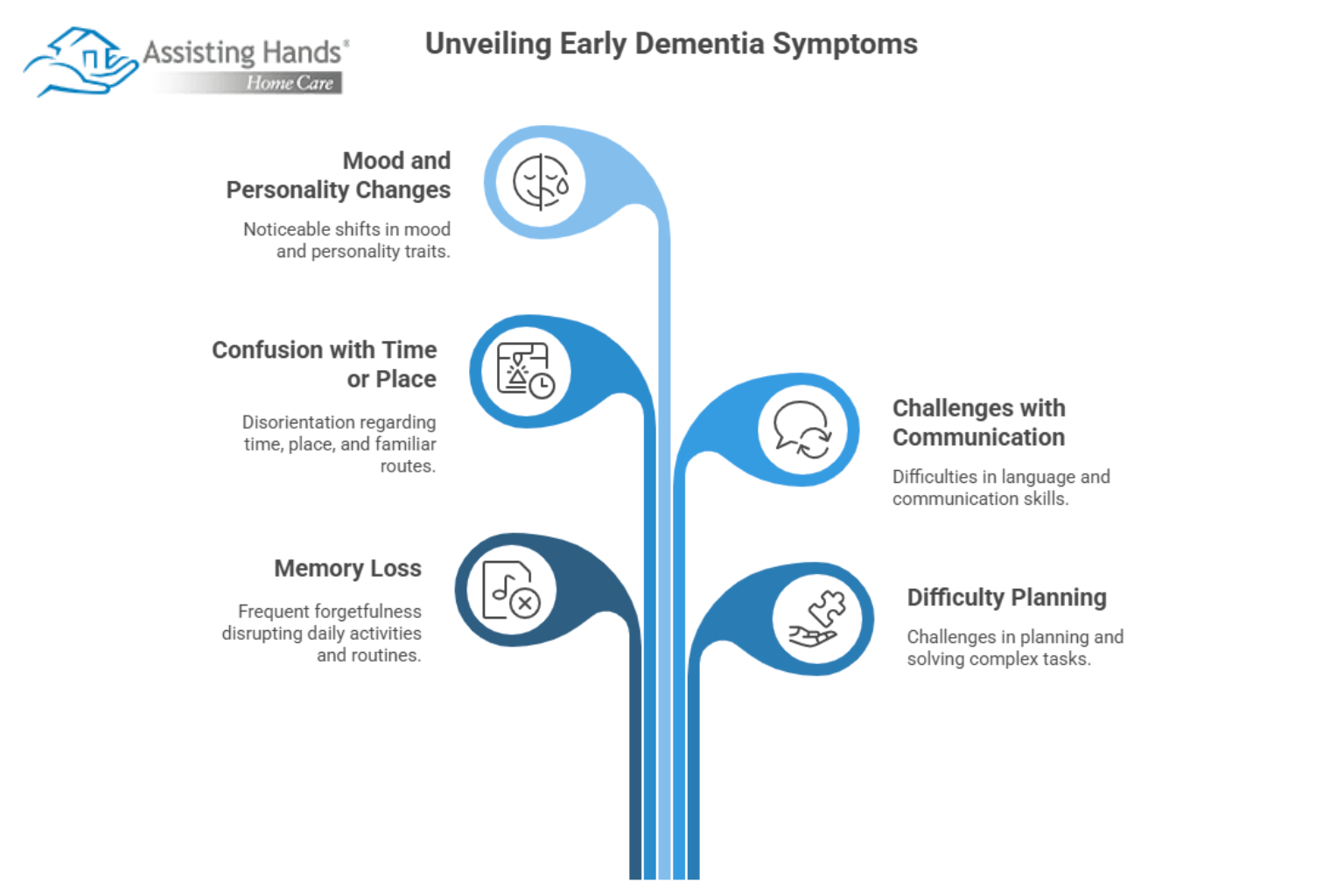
One of the hallmark symptoms of dementia in its early stages is memory loss. While it’s natural to occasionally forget where you left your keys, people with dementia frequently forget recently learned information or important dates and events. They may also ask the same questions repeatedly or rely heavily on memory aids like notes or electronic reminders.
This type of memory loss goes beyond ordinary forgetfulness and begins to interfere with everyday activities, such as managing finances or keeping track of appointments. If you or someone you know is experiencing this, it may be time to speak with a healthcare professional.
If your senior loved one has been diagnosed with a serious condition and needs help with tasks like meal prep, transportation, bathing, and grooming, reach out to Assisting Hands Home Care, a leading provider of home care Northern Kentucky, families can trust. We also offer comprehensive care for seniors with dementia, Alzheimer’s, and Parkinson’s.
Difficulty Planning or Solving Problems
A common early sign of dementia involves challenges with tasks that require planning or decision-making. For example, individuals may find it challenging to follow a recipe they’ve made countless times, manage monthly bills, or complete tasks that involve multiple steps.
Additionally, they may experience difficulty concentrating, taking much longer than before to complete basic tasks. These changes can be particularly frustrating and are often noticed by family members or colleagues.
Home care professionals can be a wonderful boon to seniors. Whether they require around-the-clock supervision or just need assistance with exercise and household tasks a few days a week, seniors can enjoy a higher quality of life with the help of trusted in-home caregivers.
Confusion with Time or Place
People in the early stages of dementia may lose track of dates, seasons, or the passing of time. They might not understand something happening later or forget where they are or how they got there.
For instance, they might drive to a familiar location and suddenly become unsure of their current location or how to get back home. This kind of disorientation can increase over time, making it important to address the issue early.
Challenges with Communication
Language and communication difficulties often arise as early indicators of dementia. Affected individuals may find it difficult to follow or join conversations. They might pause for long periods, searching for the right words, or use incorrect terms altogether.
For example, instead of calling a “watch” by its name, they might say “hand clock.” These challenges can lead to frustration and even withdrawal from social interactions.
Mood and Personality Changes
Mood swings and personality changes are common early symptoms of dementia. Someone who is typically social may become withdrawn or irritable. They might develop depression or anxiety, or show a noticeable loss of interest in hobbies they once loved.
These changes can also include increased suspicion or paranoia, particularly toward strangers or even close family members. Recognizing these emotional shifts can be critical in identifying dementia early.
Dementia can be challenging for seniors to manage, but they can maintain a higher quality of life with the help of professional dementia care. Northern Kentucky seniors can benefit greatly from the better cognitive health and stimulating activities that help them delay the onset of dementia. Dementia care is included at no additional charge with any of the in-home care plans provided by Assisting Hands Home Care. Reach out to us today to schedule a complimentary consultation.