The best ways to keep a loved one mentally stimulated include encouraging regular social interaction, introducing age-appropriate games and hobbies, involving him or her in daily routines, and supporting gentle physical movement. These activities activate memory, attention, and problem-solving skills while reducing isolation and preserving a sense of purpose.
Caring for an aging parent or partner goes beyond monitoring physical health. Your loved one’s cognitive wellbeing is just as vital for maintaining a high quality of life. Keeping a loved one mentally engaged can slow memory loss and reduce feelings of isolation, but finding new and effective activities isn’t always easy.
How Does Social Interaction Boost Brain Health?
Social interaction strengthens brain health by engaging multiple cognitive processes at once. Socializing is one of the most effective workouts for the brain because it requires complex processing. To hold a conversation, a person must listen, interpret emotional cues, recall vocabulary, and formulate a response. Isolation, conversely, is a known risk factor for cognitive decline.
You can encourage social engagement by facilitating connections with friends and family, but meaningful interaction can also happen right at home. “Reminiscence therapy”—essentially looking through old photo albums or watching home movies—is a powerful tool. It encourages your loved one to recall names, dates, and stories from his or her long-term memory. If your loved one is able, encourage him or her to tell you stories about his or her childhood or early career. This validates your loved one’s experiences while firing up neural pathways associated with memory and speech.
Respite care can be a wonderful solution for Northern Kentucky families when their aging loved ones need companionship and socialization a few hours a week or just need minor assistance with daily household tasks. At Assisting Hands Home Care, we thrive on helping seniors maintain their independence while living in the comfort of home.
Which Games Are Best for Cognitive Stimulation?
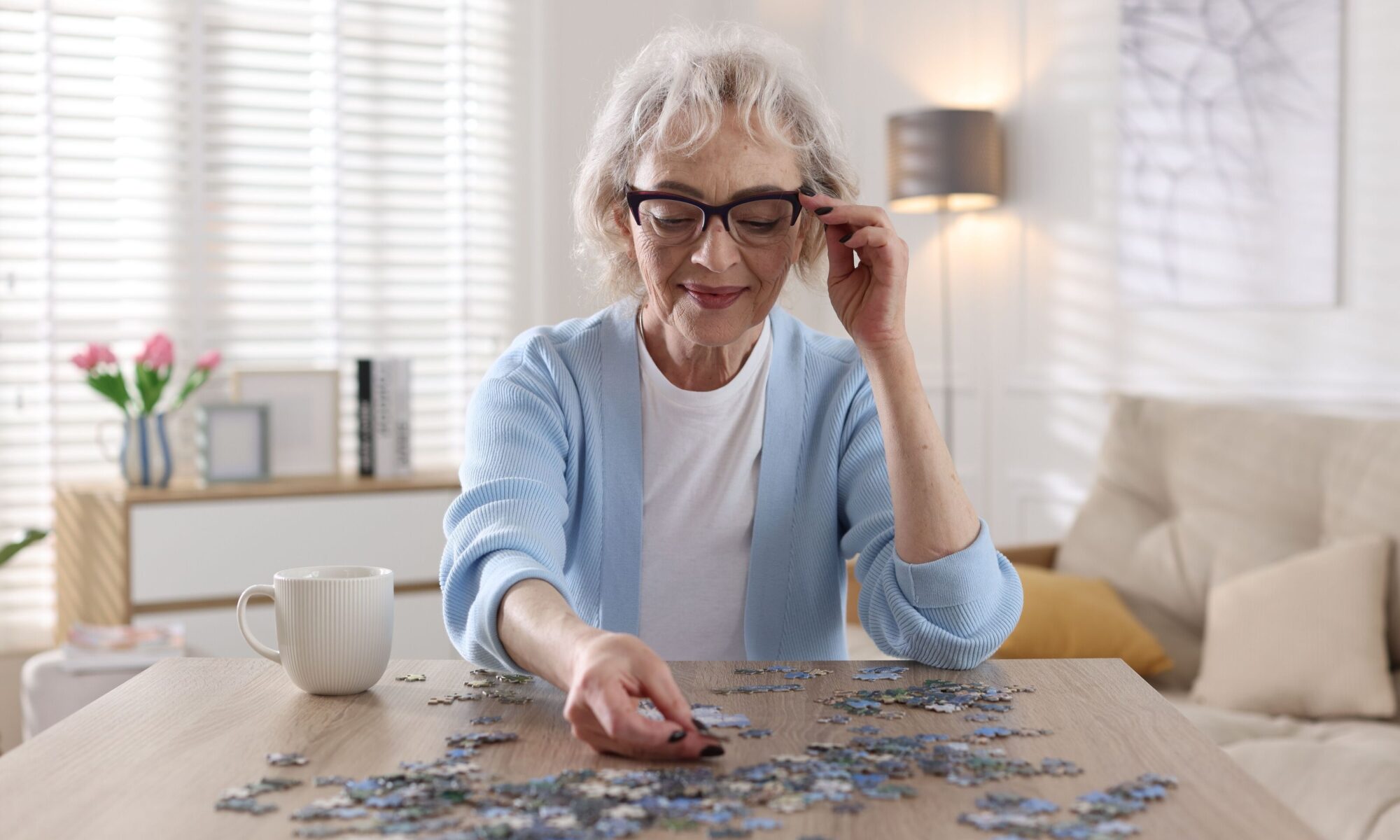
Games and puzzles stimulate the brain by encouraging problem-solving, pattern recognition, and memory recall. Games and puzzles are classic tools for brain health because they force the mind to solve problems and recognize patterns. However, the key is finding the “Goldilocks” zone: the activity should be challenging enough to be stimulating but not so difficult that it causes frustration or anxiety.
Consider introducing these activities into your loved one’s weekly routine:
- Word puzzles – Crosswords, word searches, and Scrabble help seniors maintain vocabulary and language skills.
- Number games – Sudoku or simple card games that involve counting (like blackjack or cribbage) keep math skills sharp.
- Jigsaw puzzles – These engage visual-spatial reasoning. For those with dementia, look for puzzles with fewer, larger pieces that feature adult-appropriate images rather than cartoons.
- Memory matching – Simple card-matching games can boost short-term memory and concentration.
Can Creative Hobbies Increase Mental Focus?
Creative activities like music, art, and tactile crafts stimulate multiple brain regions simultaneously. Engaging in the arts isn’t just a way to pass time. It stimulates the brain’s sensory and emotional centers. Music, in particular, has a unique ability to unlock memories and emotions even in those with advanced cognitive decline. Playing your loved one’s favorite songs from the past can boost mood and awareness.
Tactile hobbies are equally important because they connect hand-eye coordination with mental focus. If your loved one used to knit, paint, or work with wood, encourage him or her to continue these hobbies in a modified, safe way. Even simple activities like adult coloring books or molding clay can be meditative and stimulating.
If your loved one needs assistance with hobbies or daily activities, consider hiring a professional caregiver. Every senior has different needs when aging in place. Some simply need occasional assistance with household chores, while others may be managing serious illnesses and require more extensive Northern Kentucky live-in care. Seniors can count on Assisting Hands Home Care to provide the in-home care they need and deserve.
How Can Daily Routines Provide Mental Exercise?
Daily routines provide mental exercise by reinforcing sequencing, decision-making, and independence. It’s often tempting for caregivers to do everything for their loved ones to save time or ensure safety. However, allowing seniors to participate in daily chores provides a crucial sense of purpose and agency. Completing a task requires sequencing—understanding that step A comes before step B—which is a vital executive function of the brain.
Involve your loved one in low-risk household activities such as:
- Folding laundry or sorting socks
- Setting the table for dinner
- Drying unbreakable dishes
- Organizing coupons or sorting mail
These tasks can make your loved one feel like a contributing member of the household rather than a burden, boosting both self-esteem and cognitive function.
Does Physical Movement Help the Mind?
Physical movement supports mental sharpness by increasing blood flow and sensory engagement. There’s an undeniable link between physical health and mental acuity. Exercise increases blood flow to the brain, which can encourage the growth of new brain cells. While high-intensity workouts might not be possible, consistent, gentle movement is highly beneficial.
Encourage activities that combine physical movement with environmental stimulation. A walk in a park, for example, offers physical exercise while also engaging the senses with the sights, smells, and sounds of nature. Even chair yoga or simple stretching exercises can increase coordination and focus. By changing the scenery and moving the body, you keep the brain alert and ready to process new information.
Frequently Asked Questions
Does social isolation actually cause cognitive decline?
Yes. Isolation is a documented risk factor for accelerated cognitive decline, while regular social interaction helps seniors maintain cognitive function.
Should I let my loved one struggle with puzzles if he or she finds them difficult?
No. Activities should be challenging without being frustrating. Choose puzzles with fewer pieces or simpler games that match your loved one’s current abilities.
Can music help someone with advanced dementia?
Yes. Music uniquely activates memory and emotion centers, often reaching individuals even with severe cognitive impairment.
Is it patronizing to ask seniors to help with simple chores?
No. Most seniors value feeling useful and contributing. Frame tasks positively as help you genuinely need rather than busy work.
How much physical activity does a senior need for cognitive benefits?
Consistent gentle movement like daily short walks or chair exercises provides measurable cognitive benefits without requiring high intensity.
If you have a senior loved one who needs help maintaining a high quality of life while aging in place, reach out to Assisting Hands Home Care of Northern Kentucky, a leading provider of home care Northern Kentucky families can trust. Our caregivers help seniors focus on healthy lifestyle habits such as eating nutritious foods, exercising regularly, and maintaining strong social ties, and we offer mentally stimulating activities that can boost cognitive health and delay the onset of dementia. For more information about our flexible, customizable home care plans, call one of our compassionate Care Specialists today.