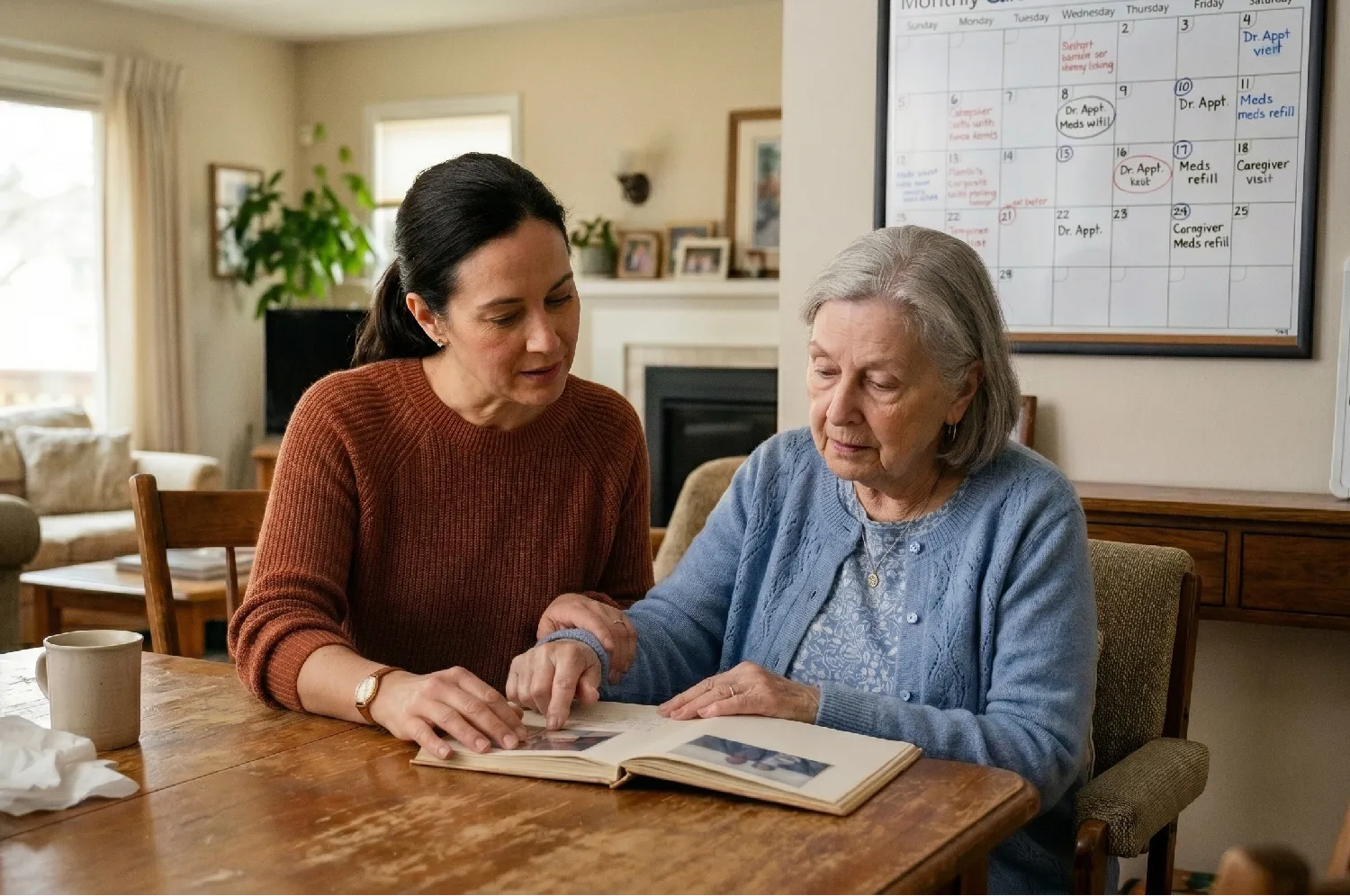
A dementia diagnosis changes life for an entire family.
Naturally, most of the attention centers on the individual living with the disease. Families begin searching for information, meeting with doctors, and trying to understand what the future may hold. They focus on safety, care needs, and finding the right resources.
Those conversations are necessary, but they often overlook someone equally affected by the journey: the caregiver.
Behind nearly every person living with dementia is someone providing support every day. It may be a spouse, an adult child, another relative, or a trusted friend. That individual often becomes the organizer of appointments, manager of medications, coordinator of services, and source of emotional encouragement.
In my experience, successful dementia care depends on both people. The caregiver’s health and wellbeing are closely connected to the wellbeing of the person receiving care. When caregivers have support, everyone benefits. When they become overwhelmed, the challenges grow for the entire family.
How Caregiving Often Happens Gradually
Very few people wake up one day expecting to become a dementia caregiver.
Most enter the role little by little.
A spouse begins helping with finances. An adult child starts assisting with transportation. Someone takes over scheduling appointments or managing medications. Small tasks slowly become larger responsibilities.
Because the changes occur over time, many caregivers don’t immediately recognize how much their role has expanded.
Eventually, they realize they’re making most of the important decisions and coordinating nearly every aspect of daily life.
This transition can be difficult because there’s no universal guidebook for dementia caregiving. Every person experiences the disease differently, and every family faces unique circumstances.
For that reason, caregivers shouldn’t expect themselves to know everything from the start. Learning through experience is part of the process.
Handling More Responsibility than Expected
As dementia advances, the demands placed on caregivers often increase.
Spouses frequently find themselves handling duties that were once shared. At the same time, they’re coping with the emotional realities of seeing changes in the people they’ve known for decades.
Adult children often face a balancing act of their own. They may be raising children, managing careers, and caring for aging parents simultaneously. Their schedules become increasingly complex as they juggle competing responsibilities.
What makes caregiving particularly challenging is that the workload builds over time. Responsibilities accumulate gradually until caregivers find themselves carrying an enormous amount of responsibility.
Many never anticipated just how much would eventually be placed on their shoulders.
Even when families have the best intentions, caring for a senior loved one with dementia can be challenging. Fortunately, Assisting Hands Home Care is here to help. We are a leading provider of dementia care Northern Kentucky families can trust. You can take advantage of our flexible and customizable care plans, and our caregivers always stay up to date on the latest developments in senior care.
When Loneliness Becomes Part of the Journey
Another challenge many caregivers encounter is loneliness.
Friends and family members may genuinely care, but they often don’t fully understand what daily dementia caregiving entails. Social engagements become harder to maintain. Personal interests take a back seat. Free time becomes increasingly limited.
As a result, many caregivers begin feeling disconnected from the activities and relationships they once enjoyed.
Spouses may experience an especially unique form of loneliness. The partners they once relied upon for companionship and shared decision-making may no longer be able to participate in those roles as before.
Although they continue the journey together, the relationship often changes significantly.
Support groups can provide tremendous value during these moments.
I have watched caregivers discover that others share many of the same frustrations, worries, and experiences. Knowing you’re not alone can ease an enormous emotional burden.
Sometimes understanding and connection are exactly what a caregiver needs most.
The Value of Letting Others Help
One of the biggest hurdles caregivers face is accepting support.
Many feel they should be able to handle everything independently.
I once worked with a husband caring for his wife at home. He was devoted to her and initially resisted bringing in outside help because he believed he should manage on his own.
Eventually, additional caregiving support was arranged.
Once services began, he started using those hours for himself. He met friends, completed errands, and occasionally simply enjoyed a break from constant responsibility.
The positive impact was immediate.
Rather than feeling drained and stressed, he returned home with more patience, energy, and focus. The time away helped him continue providing excellent care.
His experience demonstrates an important lesson. Taking a break isn’t abandoning your responsibilities. It’s a way to sustain them.
One of the most challenging tasks of helping a loved one age in place safely and comfortably is researching agencies that provide home care. Families can turn to Assisting Hands Home Care for reliable, high-quality Northern Kentucky home care for aging adults. We offer 24-hour care for seniors who require extensive assistance, and we also offer respite care for family caregivers who need a break from their caregiving duties.
Knowing Your Personal Limits
Many caregivers hold themselves to impossible standards.
They believe they should be capable of meeting every need without assistance. When that proves unrealistic, guilt often follows.
I encourage caregivers to think about three questions:
- What would I like to do?
- What am I willing to do?
- What can I realistically do?
The answers may differ, and that’s completely normal.
A caregiver may want to handle every aspect of care but lack the physical ability to do so safely. Another may feel comfortable coordinating appointments but require assistance with hands-on caregiving tasks.
Understanding those limits isn’t weakness. It’s an important part of responsible planning.
Good caregiving isn’t about doing everything yourself. It’s about creating a sustainable approach that serves everyone involved.
Why Recharging Is Essential
Caregivers frequently place their own needs at the bottom of the priority list.
Medical appointments are postponed. Exercise routines disappear. Friendships become harder to maintain. Activities that once provided joy are often pushed aside.
Initially, these sacrifices may seem temporary. Over time, however, they can become lasting habits.
The caregivers who tend to fare best understand the importance of maintaining their own wellbeing.
Whether it’s spending time with friends, attending a support group, taking a walk, enjoying a hobby, or simply relaxing for a few hours, those moments matter.
Recharging allows caregivers to continue showing up for others without completely losing themselves in the process.
During a caregiver discussion, one participant shared a simple but powerful observation. She said, “Sometimes I spend so much energy taking care of my loved one that I forget to take care of myself.”
Many caregivers can relate.
Dementia affects more than the person diagnosed with the disease. It impacts everyone involved in providing daily support. That’s why caregiver wellbeing must be part of the conversation.
The most successful caregivers aren’t those who do everything alone. They’re the ones who build support networks, seek help when needed, and recognize the importance of caring for themselves as well.
After all, supporting your own health and wellbeing isn’t separate from providing good care. It’s one of the foundations that makes high-quality care possible.
Family caregivers need to care for their own wellbeing. If you’re caring for an aging loved one and are feeling overwhelmed, consider hiring a professional caregiver. Whether you need respite from your caregiving duties or your aging loved one needs Northern Kentucky 24-hour care, Assisting Hands Home Care can meet your family’s care needs. Our dedicated caregivers are available around the clock to provide transportation to doctor’s appointments, ensure seniors take their prescribed medications, and help with a variety of tasks in and outside the home. Call today to speak with a friendly and experienced Care Manager to formulate a home care plan for your loved one.
For those interested in learning more about dementia, I host a monthly Real Talk webinar that explores one important dementia-related topic in greater detail. Learn more about upcoming sessions and register here.