Wellness Resolutions for 2015
Three great lifestyle choices for seniors and family caregivers
Happy Holidays and a Happy New Year to all our friends and families! This is a great time to take stock of our plans for 2015. Have you made your New Year’s resolutions yet? There is no shortage of research on aging and caregiving—findings that can provide motivation for making lifestyle choices to improve the health and well-being of elders and the loved ones who care for them. Here are three resolutions that might be on the list of seniors and family caregivers alike.
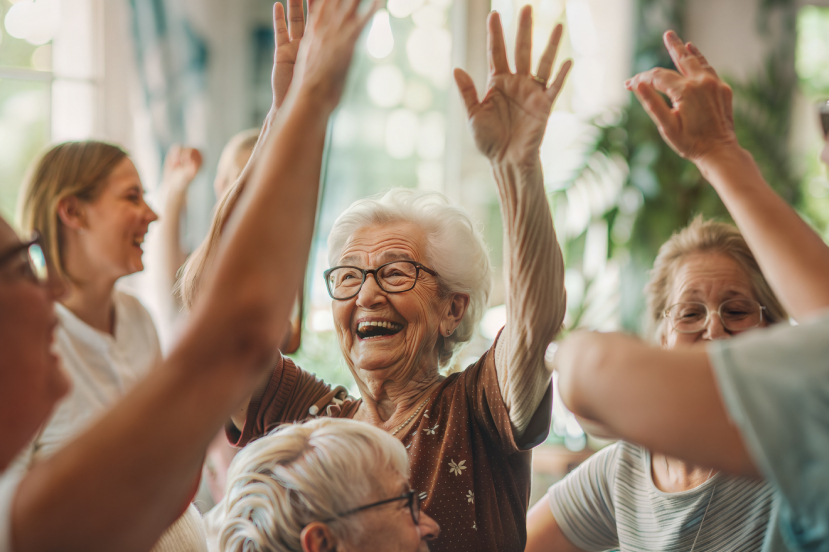
Resolution #1: Make time for exercise.
Research continues to confirm that physical activity is the top factor for healthy aging. A startling University of California San Diego study showed that spending most of the day sitting harms the heart—even for people who exercise regularly. Resolve to be more active, even in small ways. Exercise doesn’t have to be in one solid block; fifteen minutes here and there can be just as beneficial.
For seniors: Geriatrics researchers tell us that even frail seniors can benefit from increased activity. Talk to the healthcare provider about an exercise program that is appropriate for your health condition. Look into senior fitness classes, or perhaps a set of home exercises that includes aerobic, flexibility and strengthening activities.
For family caregivers: Busy family caregivers find that exercise drops to the bottom of their to-do list—or off the list entirely. But these people who do so much for their loved ones should remember that inactivity raises the risk of heart disease, cancer and even Alzheimer’s disease. Exercise is a top way to overcome stress and improve overall health. If you are having trouble scheduling a workout, it might be time to ask other family members and friends to help.
Resolution #2: Spend more time with others.
We used to think of socializing as just a way to pass the time, but research over the past few years has overwhelmingly demonstrated that spending time with others protects the brain, heart, our emotional well-being, and even our immune system.
For seniors: Older adults can be at greater risk of isolation and loneliness. Leading expert Dr. John Cacioppo of the University of Chicago says, “Chronic loneliness belongs among other health risks, such as smoking, obesity or lack of exercise.” Sensory and mobility impairment, giving up the car keys and losing friends who have passed away or moved all make socializing more of a challenge—but it’s worth the effort to find opportunities to be around other people.
For caregivers: Many caregivers, too, experience loneliness. Even as they are spending a lot of time in the company of their loved one, they miss socializing with friends. Their busy schedule, fatigue, and in some cases, fair-weather friends who stop calling, can leave them feeling isolated and depressed. This year, resolve to make a lunch date with old friends and, in addition, make some new friends. Have you tried a support group? Sharing your thoughts and suggestions with others is a great stress-buster and many long-lasting friendships have begun in this context. Social networking sites, such as Facebook, can also be a good way to stay in touch with old friends and meet new ones. These sites are not as good as “real life” friends, but for many, they offer company and stimulation.
Resolution #3: Think about your alcohol use.
Do you sometimes have a bit too much champagne on New Year’s Eve and wake up on January 1 with a headache and other symptoms of a hangover? If so, you are not alone. If this was a one-time indulgence, remember to cut back on those toasts next year. But if you drink more than you should on a regular basis, consider that the National Institute on Alcohol Abuse and Alcoholism has named alcohol abuse by people over 65 as one of the fastest-growing health problems in the U.S.!
For seniors: While there may be some health benefits from consuming a small or moderate amount of alcohol, drinking too much negates those benefits and worsens many health conditions. It damages the liver and can lead to malnutrition and fall injuries. And when seniors mix alcohol with prescription drugs, the combination can be deadly. If you are worried about a loved one’s drinking, encourage him or her to talk to their healthcare provider about counseling or a support group that is geared toward the needs of older adults.
For caregivers: Caring for a person with a substance abuse problem can quickly become your problem. But remember that you can’t force another person to deal with a drinking problem. Your loved one may be defensive or in denial and may try to conceal the problem. If the conversation isn’t going well, talk to a counselor or specialist. Join a support group for families of people with alcohol dependency. And take care of yourself. (Of course, if you are experiencing drinking problems of your own, now is a good time to get help.)
Source: Assisting Hands Home Care in association with IlluminAge. Copyright © IlluminAge, 2014
Is Winter Really Heart Attack Season?
We often hear of a person being rushed to the hospital with a heart attack after shoveling snow. Is snow shoveling really dangerous for seniors? It turns out that the extra exertion and the heavy weight of the snow are both culprits, as might be expected. However, a study from Pennsylvania State University shows that cold air itself puts extra stress on the heart, contributing to winter being peak season for deaths resulting from cardiac arrest.
According to Penn State College of Medicine researchers, breathing cold air during exercise can cause uneven distribution of oxygen distribution throughout the heart. In the bodies of people whose hearts are healthy, blood flow is redistributed and the heart continues to function properly. But for a person with a heart problem, such as coronary artery disease, the body may be unable to send enough oxygen to the heart. Says Professor Lawrence I. Sinoway, “If you are doing some type of isometric work and you’re breathing cold air, your heart is doing more work—it’s consuming more oxygen.”
The research team studied heart and lung function in a group of health people in their 20s and 60s to get a better picture of the way cold air affects the heart’s oxygen supply. Dr. Matthew D. Muller of the college’s Heart and Vascular Institute explains, “There are two different things going on here—demand and supply. We thought that oxygen demand in the heart would be higher with cold-air breathing and we also thought that oxygen supply would be a little impaired. And that’s generally what we found.”
The researchers also cautioned that other cold-weather efforts may stress the heart, even activities like carrying a briefcase or laptop bag.
The full study is to be found in the Journal of Applied Physiology.
Source: Assisting Hands Home Care in association with IlluminAge AgeWise with excerpts from Pennsylvania State University.
Geriatric Care Managers Offer Tips for Keeping Aging Parents at Home
National professional organization helps families avoid premature nursing home placement.
As a recent Congressional Budget Office (CBO) report predicted a doubling of nursing home and other long-term care costs, the National Association of Professional Geriatric Care Managers (NAPGCM) released the results of a survey of 335 aging experts that provides advice to families to help them keep aging parents in their own homes and prevent premature placement in a nursing home.
The CBO report found that the share of the nation’s economy directed to the costs of nursing home and other long-term care services could more than double by the year 2050 due to the aging of the population and a corresponding surge in seniors with physical and cognitive impairments. The CBO report said that total spending for these services reached $192 billion in 2011, accounting for 1.3 percent of the nation’s gross domestic product (GDP) and could jump to up to 3.3 percent of GDP by 2050.
With the aging of the U.S. population, confronting the need for nursing home care is an increasingly common challenge for families. According to a 2010 Kaiser Family Foundation study, over 1.3 million Americans currently reside in nursing homes. A 2012 Ohio State University report found that a majority (52 percent) of women and a third (32 percent) of men will spend time in a nursing home at some point in their lives.
Here are the top five tips identified by experts in the survey (along with the percentage of survey respondents selecting each option):
1. Assess your parent’s financial and care needs and available resources. Design a plan of care that supports wellness and encourages social interaction based on your parent’s values (90.0 percent).
2. Hire a professional to conduct an in-home assessment to look at the home environment, identify needs, obstacles and safety hazards and make recommendations to keep an aging parent home (85.8 percent).
3. Identify and arrange for any needed home modifications, community resources, paid and unpaid care and medical supports to assure home safety and support aging in place (84.7 percent).
4. Identify and understand your parent’s preferences (67.6 percent).
5. Identify the community support systems and programs that are available, including those that are low cost, free or part of entitlement programs (67.3 percent).
“Confronting the need to move into a nursing home or other facility can be one of the most painful and difficult challenges facing aging adults – it is an issue that geriatric care managers deal with on a daily basis,” said NAPGCM President Jullie Gray. “The good news is that there are many steps that can be taken to help seniors remain in their homes. With some planning and thought, many people can age in place in their homes and communities – and there is ample evidence that living at home can lead to a longer and more fulfilling life,” she added.
Source: National Association of Professional Geriatric Care Managers (NAPGCM). Geriatric care managers are professionals who have extensive training and experience working with older people, people with disabilities and families who need assistance with caregiving issues. To learn more, visit the NAPGCM website (www.caremanager.org).
“The Gift of Healthy Holiday Dining” Wordfind
Give yourself the gift of healthier holidays by selecting foods that support wellness.
Your need for healthy eating doesn’t take a holiday. A few indulgences won’t hurt, but if you already started with Halloween candy and ended November with pumpkin pie and turkey gravy, you may already be carrying a few extra pounds by the time fruitcake, eggnog and the holiday parties come along. Being aware of your nutritional needs even during this busy time of year will give you a head start on your resolutions for the New Year!
This month’s puzzle contains 20 things to keep in mind as you plan your holiday meals. Download your copy here. Need a little help? Click here for the puzzle solution.